

Tour tyre widths have moved well beyond the 23mm and 25mm norms that once defined road racing.
A hands-on sample of 13 bikes from the 2025 Tour de France shows how far the professional peloton has shifted. Across road bikes and time trial machines, measured tyre sizes now regularly exceed the numbers printed on the sidewalls.

The sample covered 26 individual tyres. Their average measured width was 30.29mm, even though the median labelled size was 28.5mm. That means the average tyre measured 1.79mm wider than its nominal size.
The trend reflects a broader change in bike and wheel design. Wider rims now dominate many top-end setups, while modern tyre casings often expand more once mounted. Together, those changes mean a 28mm or 30mm label rarely tells the full story.
Tour tyre widths now average more than 30mm

The biggest shift is the rise of 30mm tyres as a mainstream WorldTour choice. In this sample, 30mm was the most common nominal size, appearing on 12 of the 26 tyres measured.
Nominal 28mm tyres remained close behind, accounting for 11 tyres. Only one sampled bike used labelled 25mm tyres for racing: Tadej Pogačar’s Colnago TT2 time trial bike.
The rest of his UAE Emirates-XRG team also used that time trial setup, according to the observed equipment information.
Even those supposedly narrow tyres were not especially narrow by older racing standards. Pogačar’s TT tyres measured 28.2mm at the front and 27.94mm at the rear. They were the smallest widths recorded in the sample.
A decade ago, 23mm tyres still appeared regularly at the Tour de France. A 25mm tyre looked progressive, while 28mm was often reserved for cobbled or rougher stages. The current data shows a very different performance target.
Road bikes outpace time trial bikes
The divide between road and time trial equipment remains clear. Road bikes in the sample averaged 30.82mm measured tyre width. Time trial bikes averaged 29.68mm.
That 1.14mm gap may sound minor. At Tour de France level, it can matter because tyre width affects aerodynamics, rolling resistance, comfort, grip, and frame clearance.
Road racing now places more value on efficiency over imperfect surfaces. Teams also seek comfort and grip without giving up aerodynamic performance. Many modern race frames can now accept much larger tyres than older bikes.
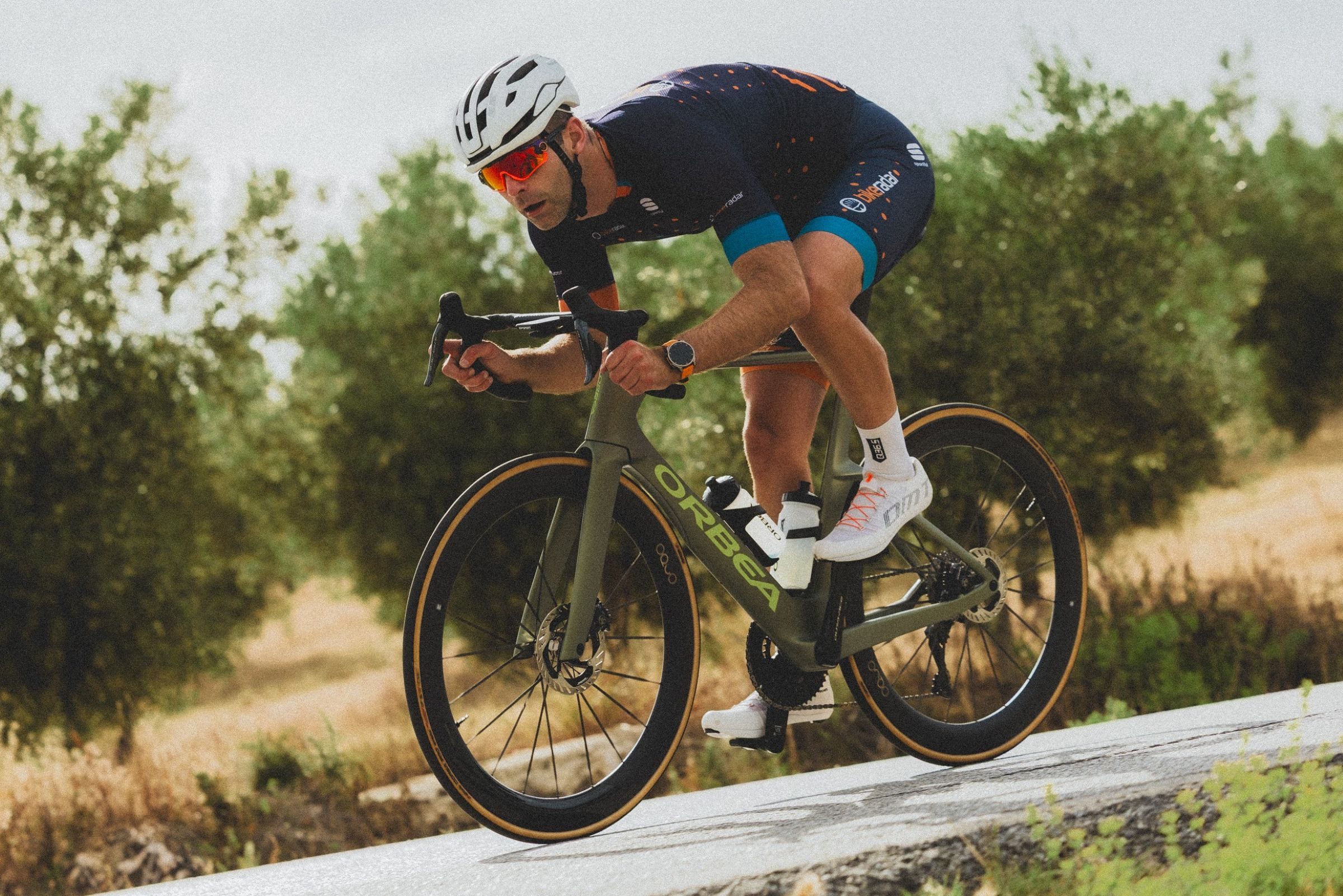
The Orbea Orca Aero is one example, with room for tyres measuring up to 37mm. Race bikes with clearance beyond 32mm have also become common.
Time trial bikes still follow a different priority list. Designers focus heavily on frontal area and airflow around the fork, frame, and wheels. Wider tyres can work on modern TT frames, but teams often choose slightly narrower setups for aerodynamic integration.
That means narrower tyres still have a role against the clock. The definition has changed, though. When road bikes commonly used 23mm or 25mm tyres, TT bikes could appear with 19mm or 21mm tyres.
Wider fronts show changing priorities

The sample also showed a front-rear split. Front tyres averaged 30.72mm, while rear tyres averaged 29.87mm.
That points to a growing preference for wider front tyres in the peloton. Teams appear to value front-end grip, ride quality, and rolling efficiency. Slightly narrower rear tyres can help with frame clearance and aerodynamic packaging.
Jonas Vingegaard’s Cervélo S5 offered the clearest example. His bike used a nominal 30mm front tyre and a 29mm rear tyre.
Vingegaard’s front tyre measured 33.2mm, making it one of the widest tyres recorded. His bike was the only sampled machine with a nominally wider tyre at the front. The setup was speculated to help meet the UCI’s 6.8kg minimum weight rule.
Mohorič records the largest measured tyres
Matej Mohorič’s Bianchi Specialissima best illustrated the road-bike move toward larger volumes. Its nominal 30mm tyres measured 33.31mm at the front and 33.65mm at the rear.
Those were the largest tyre measurements in the sample. They would not look unusual on an endurance bike, yet they appeared on a Tour de France race machine.
Rim width helps explain many of the results. Internal rim widths from 22mm to 25.4mm now appear among major wheel brands. Under ETRTO guidance, a 28mm tyre on a 21mm internal rim should measure 28mm.
Wider rims usually push the real measurement higher. Rims around 22mm to 23mm internally tended to produce 28mm or 30mm tyres measuring about 1mm to 2mm above the label.
The widest rims in the sample measured 25.4mm internally. These Reserve wheels appeared on Vingegaard’s Cervélo S5 and Per Strand Hagenes’ Cervélo P5. They produced some of the largest measured tyres.
Tyre construction can matter just as much. Mohorič’s Specialissima used comparatively conventional 23mm rims, yet its tyres measured beyond 33mm.
Lenny Martinez’s Bianchi Aquila RC offered another example. It used nominal 28mm Continental Grand Prix 5000 TT TR tyres on 23mm hooked rims. Its front tyre measured 31mm.
That was wider than the nominal 30mm Cadex tyres on Luke Plapp’s Giant Propel Advanced SL, which used 22.4mm hookless rims.
The overall message is clear. Professional road racing has not merely accepted wider tyres. At the Tour de France, it now depends on them.