

Paul Seixas strengthened his Tour de France position with third place on stage 10 to Lioran, despite entering unfamiliar territory.
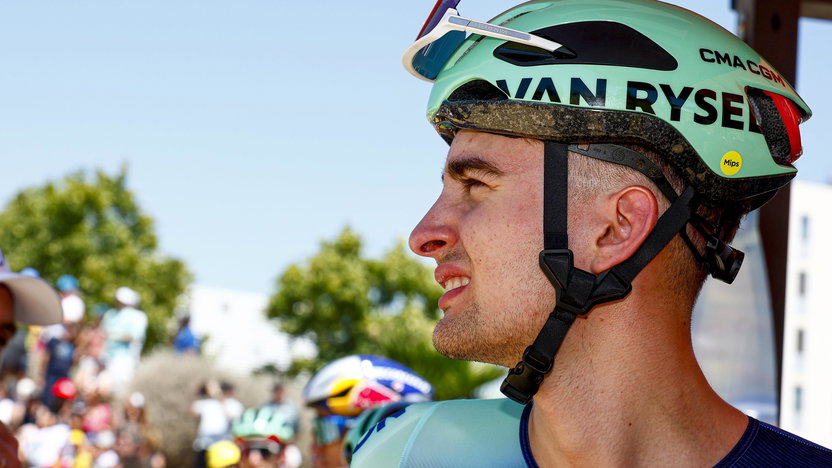
The 19-year-old had never raced beyond one week before this Tour. At the race midpoint, he sits fifth overall.
Tadej Pogačar proved untouchable on the Bastille Day stage, attacking on the Col du Pertus. Seixas finished 34 seconds behind him.
That result placed Seixas among the strongest riders behind the world champion. It also kept a podium place within reach.
Paul Seixas survives key GC test
Pogačar’s acceleration came with just under 16km remaining. It immediately broke apart the yellow jersey group on the Col du Pertus.
Seixas stayed with an elite chasing selection containing Jonas Vingegaard, Juan Ayuso and Florian Lipowitz.
Isaac del Toro, Pogačar’s UAE Team Emirates-XRG teammate, could not follow the move. He lost 1:31 in the finale.
Del Toro dropped from third to seventh overall. He also lost the white jersey after his difficult finish.
Seixas moved to second in the young rider classification. He trails Ayuso by 13 seconds in that competition.
In the overall standings, Seixas is 4:35 behind Pogačar. He is also only 29 seconds from a Tour podium place.
Seixas called third place on such a demanding stage “super” after the finish, according to RMC Radio.
He noted that he had performed well on different kinds of mountain terrain. The Tourmalet stage suited pure climbers more, he said.
The Lioran stage, by contrast, demanded repeated explosive efforts. Seixas saw his competitiveness across both profiles as important progress.
Dangerous descent changes Decathlon tactics
UAE Team Emirates-XRG controlled much of the stage. Still, Seixas’ Decathlon CMA CGM squad appeared near the front on the Puy Mary.
Seixas said the move owed more to safety than aggression. The team wanted good position before a risky descent.
He said the road surface seemed to be melting. That made the descent unpredictable and affected his confidence through the corners.
At the first bend, Seixas felt his rear wheel slide. Later, he also felt his front wheel slip.
Seixas described the descent as “like an ice rink.” He said Decathlon avoided risks after recognising the danger.
That positioning helped him enter the decisive phase without losing contact. It also prevented unnecessary trouble before the Col du Pertus.
The final climb changed the general classification battle. Seixas said the pace from the bottom of the Pertus was immediately severe.
He felt the rhythm was too high, so he chose to manage his effort. The group fragmented almost straight away.
When Pogačar attacked again on the climb’s second half, the chase went full gas to the summit.
Seixas then found himself in a complicated group. Several riders had spent too much energy early on the climb, he explained.
That created disorder in the chase behind Pogačar. Vingegaard eventually took much of the responsibility on the road to Lioran.
Seixas said the group let Vingegaard lead because he was likely the second strongest rider. He also had the most to lose.
Vingegaard guided the chase to the final metres. Remco Evenepoel and Seixas then sprinted clear within sight of the finish.
Evenepoel, riding for Red Bull-Bora-Hansgrohe, took second on the stage. Seixas followed for his best Tour result so far.
The finish underlined Seixas’ rare poise in his first Grand Tour. It also gave Decathlon CMA CGM another reason to protect his GC ambitions.