

Lidl-Trek tactics came under scrutiny after stage nine of the Tour de France, where the team reached the finale with several possible winning routes but left Ussel without the stage victory it believed was within reach.
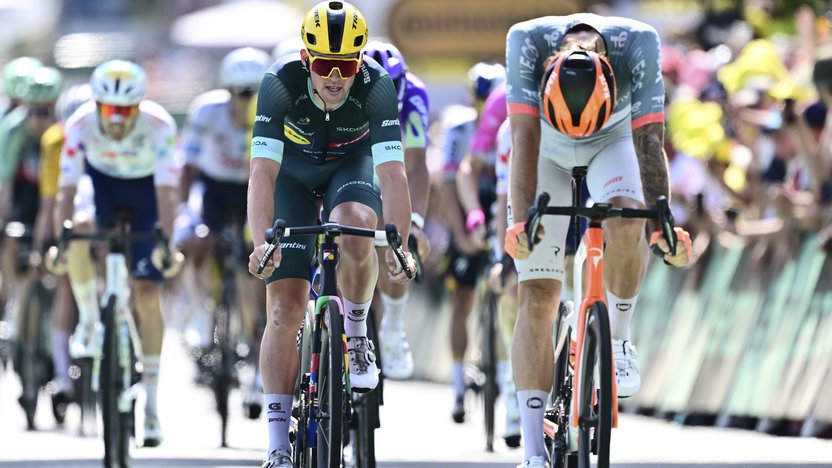
The team had Quinn Simmons in the breakaway, while Mads Pedersen remained a threat from the peloton. Derek Gee was also part of the move up the road, adding to a strong front group that proved difficult to control.
For much of the decisive phase, Lidl-Trek appeared well placed. Simmons gave the team representation in the break, and Pedersen survived the day’s hardest climbing well enough to keep a sprint option alive behind.
That combination created opportunity, but also a tactical problem. Simmons and Gee could not stay with the strongest riders in the breakaway. The peloton’s response then came too late to bring back the decisive move.
Mathieu van der Poel eventually completed the move that mattered and took the stage win. Pedersen finished sixth after narrowly losing the peloton sprint to Filippo Ganna.
Lidl-Trek tactics leave Skjelmose frustrated
Mattias Skjelmose said the missed chance was hard to accept, given the team’s position entering the finale. He told TV2 that Lidl-Trek had been in “a really good position” while Pedersen was also riding strongly.
Skjelmose called it “a difficult day” for decisions and said the team felt disappointed to miss the stage victory.
Much of the plan depended on whether Pedersen could clear the category two climb with the peloton. Once he did, Lidl-Trek reduced the work from its riders in the breakaway and looked more closely at the sprint option behind.
That shift created a delicate balance. The team wanted to keep pressure on the race ahead, but it also had to decide how much strength to spend in the peloton.
Pedersen later defended the choice not to use Skjelmose in the chase. He said committing Skjelmose and Juan Ayuso fully could have affected wider general classification ambitions.
Speaking to TV 2, Pedersen described the situation as “difficult” and said the breakaway was “extremely strong.”
Skjelmose had offered to take turns in the chase, but Pedersen told him not to work. Pedersen said the timing mattered, and he did not believe one more rider would have changed the outcome once the race had reached that point.
He said he had to hope the gap would come back enough, then try to produce a long sprint at the finish.
Simmons option disappears from the break
Lidl-Trek had also viewed Simmons as a possible winner from the breakaway. That plan changed when the American told the team he did not have the legs needed to fight for the stage.
Skjelmose said Simmons would normally suit that type of stage. Once Simmons reported that he was not feeling strong enough, the team had to alter its approach.
The final outcome left Lidl-Trek with useful points for Pedersen in the green jersey competition, but little satisfaction. The Danish sprinter remained competitive deep into the stage, yet the team could not convert its multiple options into a win.
For Lidl-Trek, the day showed how quickly a strong tactical position can become a compromise. The team had a rider in the move, a fast finisher behind, and riders capable of helping the chase. It still had to choose which ambition to protect.
Pedersen’s sixth place softened the damage in the points standings, but the broader feeling was frustration. Lidl-Trek had entered the finale with genuine chances on two fronts and watched Van der Poel take the prize.