

Pogačar dominance has become the central issue at the Tour de France, even as the race offers drama elsewhere. Tadej Pogačar has four stage wins so far, including a 40km solo attack over the Tourmalet.
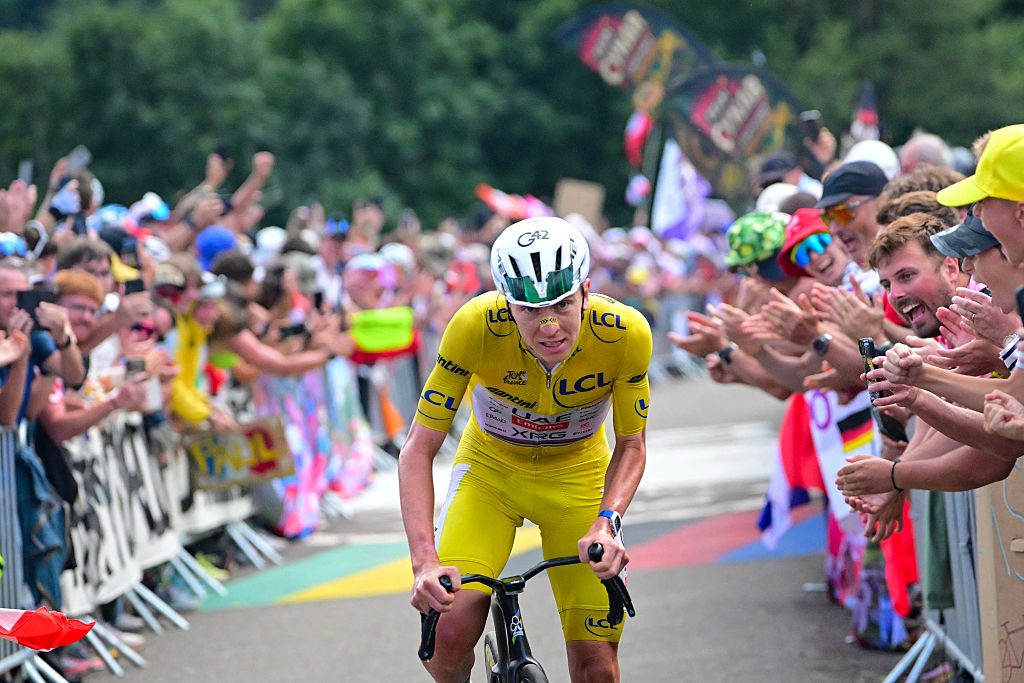
That tally already accounts for more than a quarter of the stages contested. It has also reinforced the sense that the yellow jersey contest has moved beyond reach.
The Tour began in Barcelona with familiar questions about whether anyone could prevent Pogačar from controlling the race. Those questions have gained force as his rivals have struggled to stop his repeated accelerations.
Pogačar dominance overshadows a tight podium fight
Behind Pogačar, the race remains highly competitive. Less than a minute and a half separates Remco Evenepoel, Isaac del Toro and Paul Seixas in the fight behind him.
That contest would normally drive the main suspense of a Grand Tour. Instead, it sits beneath a race narrative defined by Pogačar’s repeated ability to distance everyone.
Seixas has added another major storyline. The 19-year-old homegrown prospect has a realistic chance of becoming the youngest rider ever to finish on the Tour podium.
Florian Lipowitz has also produced another strong ride and remains part of the broader top-10 discussion. Yet both riders risk being viewed through the lens of Pogačar’s overwhelming advantage.
The race took another major turn on stage 15. Jonas Vingegaard, second overall, crashed out with a broken collarbone on a relatively harmless right-hand bend.
The crash came after Vingegaard had been woken during the night for an anti-doping control. His exit removed the most obvious challenger to Pogačar’s hold on the race.
Fans wrestle with dominance and spectacle
Pogačar remains one of cycling’s most popular champions. His attacking style, charisma and showmanship have long separated him from many dominant Tour winners.
Even so, repeated success can change how supporters experience a race. Uncertainty often matters as much as the result in professional cycling.
Long-range solo attacks in the high mountains once felt rare at the Tour. Pogačar has made them feel familiar, especially when he launches from far out and still wins.
That familiarity can blunt the spectacle. A dominant rider may create extraordinary performances while also reducing the tension that keeps neutral fans invested.
The reaction on the roadside has not been uniform. Pogačar has faced some boos during this Tour, though those remain a minority response.
Large crowds in the Vosges this past weekend showed that affection for him remains deep. The turnout underlined his continuing pull with cycling fans.
The sport has seen this pattern before. Chris Froome, Lance Armstrong, Eddy Merckx, Bernard Hinault and Jacques Anquetil all faced backlash during dominant periods.
Hinault’s popularity at the Tour arguably peaked in 1986, when he fought a rearguard battle against eventual winner Greg LeMond. That contest offered uncertainty until the race resolved.
Pogačar’s season has also shown when dominance feels different. At Paris-Roubaix, his duel with Mathieu van der Poel carried built-in jeopardy because Van der Poel had won the previous three editions.
At the Tour, the balance has shifted. Pogačar still attracts admiration, but his command leaves less room for suspense at the top.
That tension now defines the race. The Tour still has elite performances, emerging talent and fierce podium stakes, but Pogačar dominance keeps pulling every storyline back to one rider.