

The 2026 Tour de France ended with Tadej Pogačar again defining the race and its wider arguments.
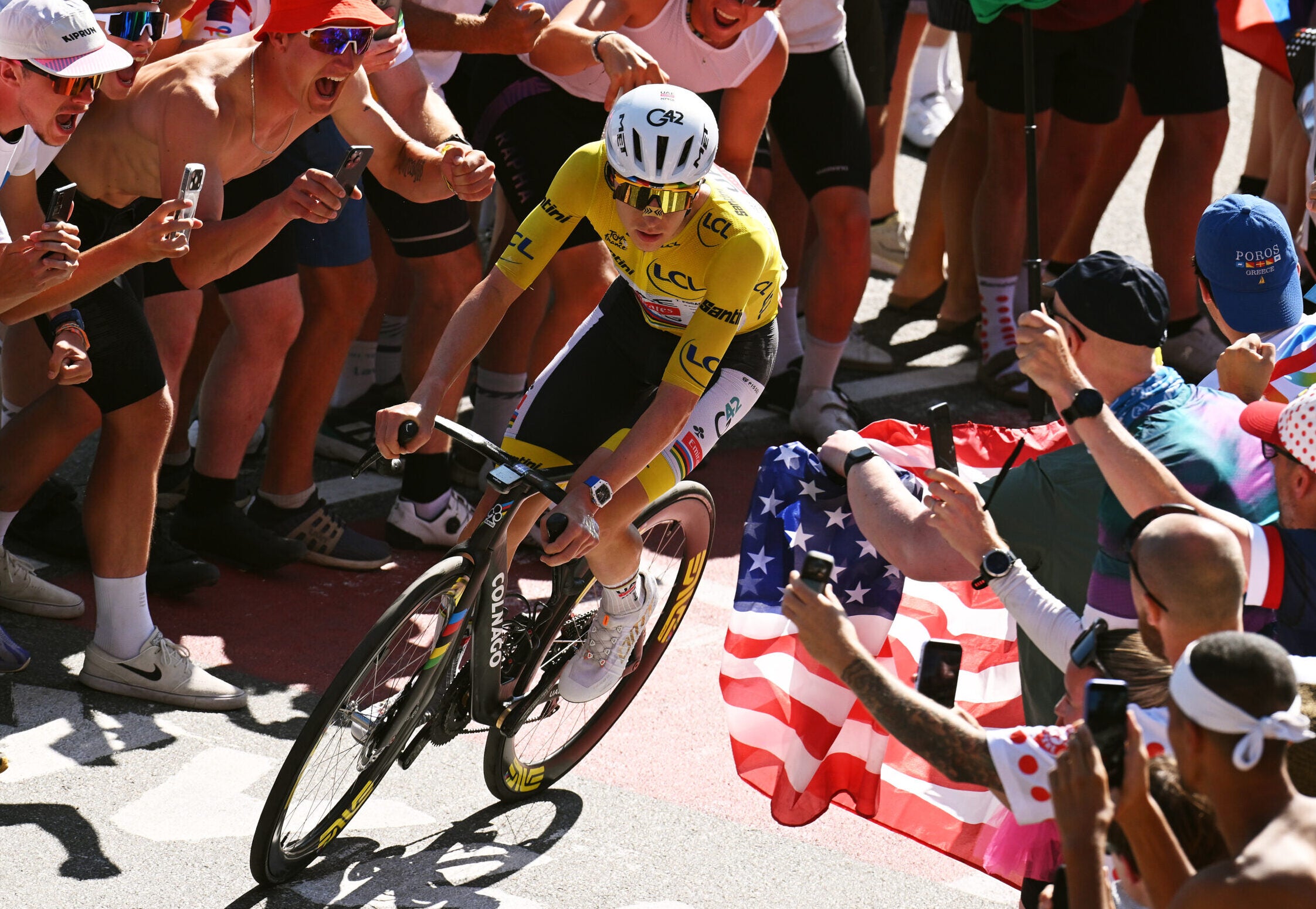
The UAE Emirates-XRG leader secured a record-equaling fifth yellow jersey after another dominant July. His control of the race framed almost every post-Tour debate, from team strength to the future of rivals.
Remco Evenepoel emerged with second overall and a stronger answer to critics. After sealing his position on stage 20, he said, “It’s proof the disbelief in me is unjustified.” His performance also reinforced Red Bull’s controversial preparation program.
Jonas Vingegaard’s crash-out removed a key storyline. His chances of a third Tour title already looked limited, yet his absence still changed the race. The expected fight with Pogačar never reached its final act.
2026 Tour de France raises route and climate questions
The race also left ASO facing familiar structural issues. A fierce heatwave affected the start, and that problem looks unlikely to disappear.
Moving the Tour away from July remains the clearest climate response. Earlier stage starts would also reduce exposure to extreme heat. Neither option appears likely soon, which leaves shorter stages as a possible compromise.
Alpe d’Huez also returned to the center of route debate. The climb remains iconic, but its Tour relationship looks increasingly strained.
When empty, the resort road offers little visual charm. When packed, its 21 bends can become chaotic. Endless barriers would damage the spectacle, while ticketing looks difficult to enforce.
The final Paris stage offered a more successful experiment. The Montmartre format was trimmed to 90km, lasted about two hours, and kept the general classification neutral. With 8km from Montmartre to the finish, it delivered a sharp finale.
Jerseys thrive when GC contenders stay away
The points and mountains competitions produced some of the race’s best racing. A revised points structure encouraged Mads Pedersen to chase green across major climbs.
Richard Carapaz and Valentin Paret-Peintre turned the polka dot battle into a genuine breakaway contest. Their duel showed how separate incentives can improve racing away from the yellow jersey.
Carapaz brought panache to the mountains in full polka dots and a gold chain. Pedersen’s power over high terrain added another striking thread to the race.
Quinn Simmons also left a strong impression with aggressive racing. His form prompted discussion about his prospects at the Montréal road worlds.
Sepp Kuss remained one of the peloton’s most popular figures despite a painful near miss. After falling near a ravine on stage 19, he called it “a bit scary” and still praised the fight.
Speed, money and equipment underline widening gaps
The 2026 Tour de France did not slow down. Stage 11 became the fastest stage in Tour history. The full race also set a record average speed.
That acceleration arrived alongside new fueling discussion. First-generation lactate gels and drinks appeared with UAE Emirates-XRG and another team understood to be Lidl-Trek. The products remain in a prototype phase, but their potential attracted attention.
Lidl-Trek also drew notice with special edition Tour de France bikes. Their look became one of the more memorable equipment stories of the race.
The results table showed a sharper divide between leading and struggling teams. Only 10 teams won stages across the race.
Three teams took 12 of the 21 stages. UAE Emirates-XRG won six, while Soudal Quick-Step and Alpecin-Premier Tech each won three.
Only two wildcard stage-winners appeared in the tally: Søren Wærenskjold for Uno-X and Mauro Schmid for Jayco AlUla. UAE and Red Bull-Bora-Hansgrohe also collected 49 percent of the prize purse.
At the other end, six teams failed to break €20,000. PicnicPost-NL, Cofidis, and Groupama FDJ struggled for visibility, while Lotto-Intermarché found more airtime. Baptiste Veistroffer became a popular figure from that effort.
Young riders and old debates remain central
Paul Seixas met extreme expectations at 19, even without the white jersey or a podium place. His race reinforced his status as France’s leading long-term hope.
Isaac del Toro’s Tour future looks more complicated. He has the potential to win the race, but UAE Emirates-XRG controls his path through 2029. Pogačar’s own ambitions may shape those opportunities.
Jordan Jegat and Yannis Voisard quietly finished 10th and 11th overall. Their high placings arrived with limited attention compared with the major GC names.
Doping debate also remained part of the Tour, even two decades after Operación Puerto. This time, the argument focused more on testing zeal than enforcement failure.
Alpecin-Premier Tech closed with another reminder of its resilience. After difficult leadouts, tension and early frustration, the team still left with three stage wins.
Mathieu van der Poel won twice, and Jasper Philipsen added another victory. Alpecin has now won a stage at every Tour de France since 2021, continuing one of the race’s strongest streaks.