

A stage 13 breakaway looks the leading scenario as the Tour de France moves toward Belfort. After two sprint opportunities, the route now favours powerful attackers before the weekend mountains.
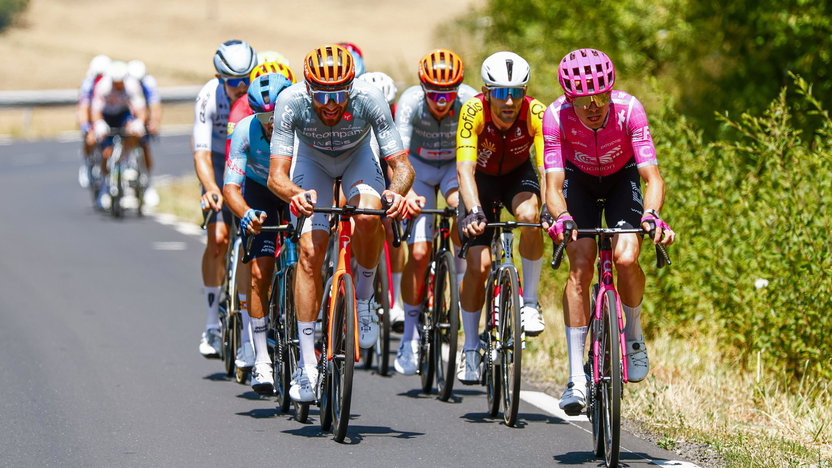
The general classification contenders have little reason to reveal everything before two demanding climbing days. That could leave control of the race to stage hunters, opportunists, and teams chasing secondary objectives.
However, this is not a simple day for pure climbers. The opening 150 kilometres are largely flat, which should make the breakaway hard to enter. Riders will need speed, positioning, and strength before the climbing begins.
Why a stage 13 breakaway looks likely
The profile changes sharply in the final quarter of the stage. The Col des Croix comes first, with 5.1 kilometres at 4.7 percent. It should not decide the winner alone, but it can weaken a large escape.
A short descent and a six-kilometre valley section then lead into the main test. The Ballon d’Alsace measures 8.7 kilometres at 6.9 percent and carries first-category status.
That climb should separate the strongest all-rounders from riders who joined the move on power alone. It may also decide whether any sprinter can stay in contention.
From the summit, the race still has 30 kilometres remaining. The route includes about 12 kilometres of descending before 18 kilometres of gradually downhill roads into Belfort.
Those final kilometres reward riders who can descend cleanly, recover quickly, and still finish fast. A solo attack over the top could work. A reduced sprint also remains possible.
Pedersen gives Lidl-Trek a different option
The clearest complication is Lidl-Trek and Mads Pedersen. The Dane remains focused on the green jersey, and his team may consider controlling the race.
Lidl-Trek already showed on stage four that it will work hard to bring back a breakaway for Pedersen. If he believes he can survive the Ballon d’Alsace, the team could chase again.
Pedersen has the power to handle the flat start and the finishing speed to win in Belfort. His entire challenge rests on the final classified climb.
Lidl-Trek also has possible breakaway cards. Quinn Simmons stands out as a joker if the team does not commit fully to Pedersen. Mattias Vacek, Derek Gee-West, and Toms Skujiņš also add depth.
All-rounders headline the Belfort contenders
Jayco AlUla brings several riders suited to the unusual profile. Michael Matthews looks especially dangerous if a reduced group reaches Belfort together.
Matthews has crashed earlier in the race, yet he has appeared strong since then. His mix of power, climbing ability, descending skill, and sprint speed fits the stage well.
Mauro Schmid offers another serious option for Jayco AlUla. He reads breakaway racing well and appears to be improving as the Tour progresses. Luke Plapp could also feature, although he may need to attack before the sprint.
Filippo Ganna is one of the most intriguing names for Netcompany Ineos. His strength in the team time trial and on stage nine showed his condition. A puncture ended his stage 12 hopes.
The long flat opening suits Ganna perfectly. The key question is whether he can stay close enough on the Ballon d’Alsace. If he crests near the front, he becomes dangerous on the descent and run-in.
Kévin Vauquelin gives Netcompany Ineos another strong card. He has the power to join the move, the climbing ability to survive, and enough speed for a small group finish.
Tudor will look toward Marc Hirschi as his form improves. He can sprint, climb, and enter a move on flatter roads. His descending may prove decisive after the Ballon d’Alsace.
Ramses Debruyne looks like Alpecin-Premier Tech’s most interesting option. His breakthrough season has shown the climbing, descending, and sprinting traits needed here. Making the break during the fast start may be his biggest obstacle.
EF Education EasyPost should race aggressively. Alex Baudin appears to be its strongest card, with form, flat-road power, and climbing ability. A sprint against faster finishers would suit him less.
Michael Valgren brings experience and tactical sense for the same team. He knows how to win from breakaways and has remained strong after completing 18 Giro stages, where he won a stage.
Movistar will now hunt stages after the departure of Cian Uijtdebroeks. Javier Romo looks like its best chance and may need to attack alone. Raúl García Pierna offers more versatility, while Pablo Castrillo has form but may find the descent less ideal.
Other names to watch include Harold Tejada, Marco Frigo, and Anders Halland Johannessen. The stage demands many skills, which makes the final selection unusually difficult to predict.