

Tour de France bike weight remains higher than many marketing claims suggest, even on machines prepared for race favourites.

A seven-bike scale check at the 2026 Tour found an average just above 7kg. That sits around 200g over the UCI minimum of 6.8kg for road bikes.
The sample was small, partly because checks also covered several time trial bikes. Still, the road bikes included machines used by leading overall contenders. They also included several new models built around current lightweight road-bike technology.
The result continues a familiar pattern at cycling’s biggest race. In recent years, very few Tour bikes have dropped below 7kg. Only Tadej Pogačar’s Colnago V5Rs at the 2025 Tour was recorded below 6.8kg in that run of checks.
Tour de France bike weight falls, but context matters
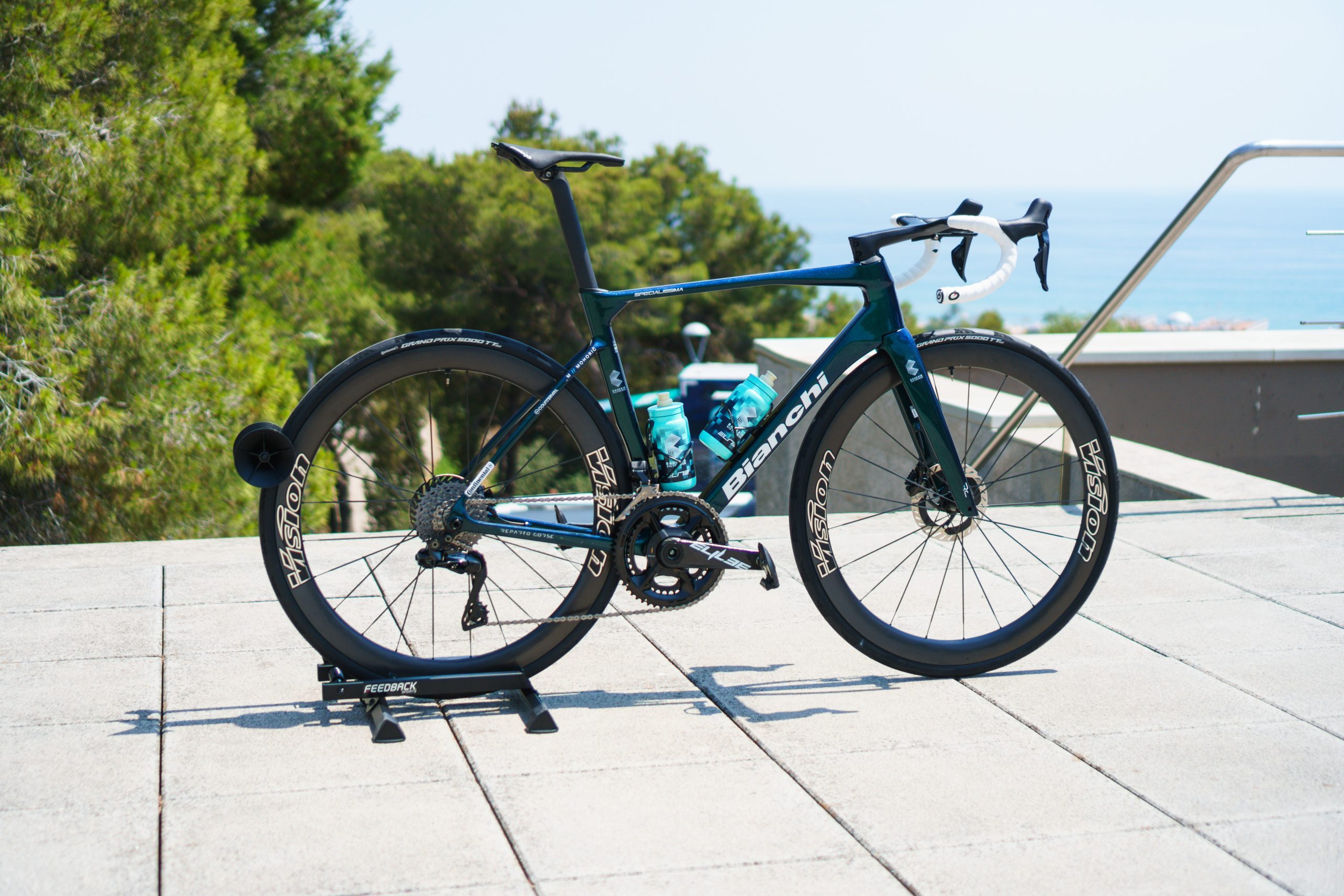
Compared with the 2025 Grand Départ in Lille, the average dropped by almost half a kilogram. On paper, that looks significant. Removing 500g from any pro-level bike usually demands expensive and careful choices.
The race route likely explains much of the change. This year’s race began in Barcelona with a team time trial on stage one. It then offered two hilly stages and one mountain stage before the first flat stage on day five.
Those early demands encouraged lighter equipment choices. By contrast, last year’s Lille start opened with a flat stage, where riders leaned heavily into aerodynamic setups.
Tobias Halland Johannessen’s equipment shows the difference clearly. His Ridley Noah Fast weighed 8.2kg at last year’s Tour. His prototype lightweight Ridley for this year’s race came in at 6.9kg.
That lighter Ridley still sat 100g above the UCI limit. The gap matters because several brands advertise top-end road bikes near or below that figure.
Claims and race builds do not always match
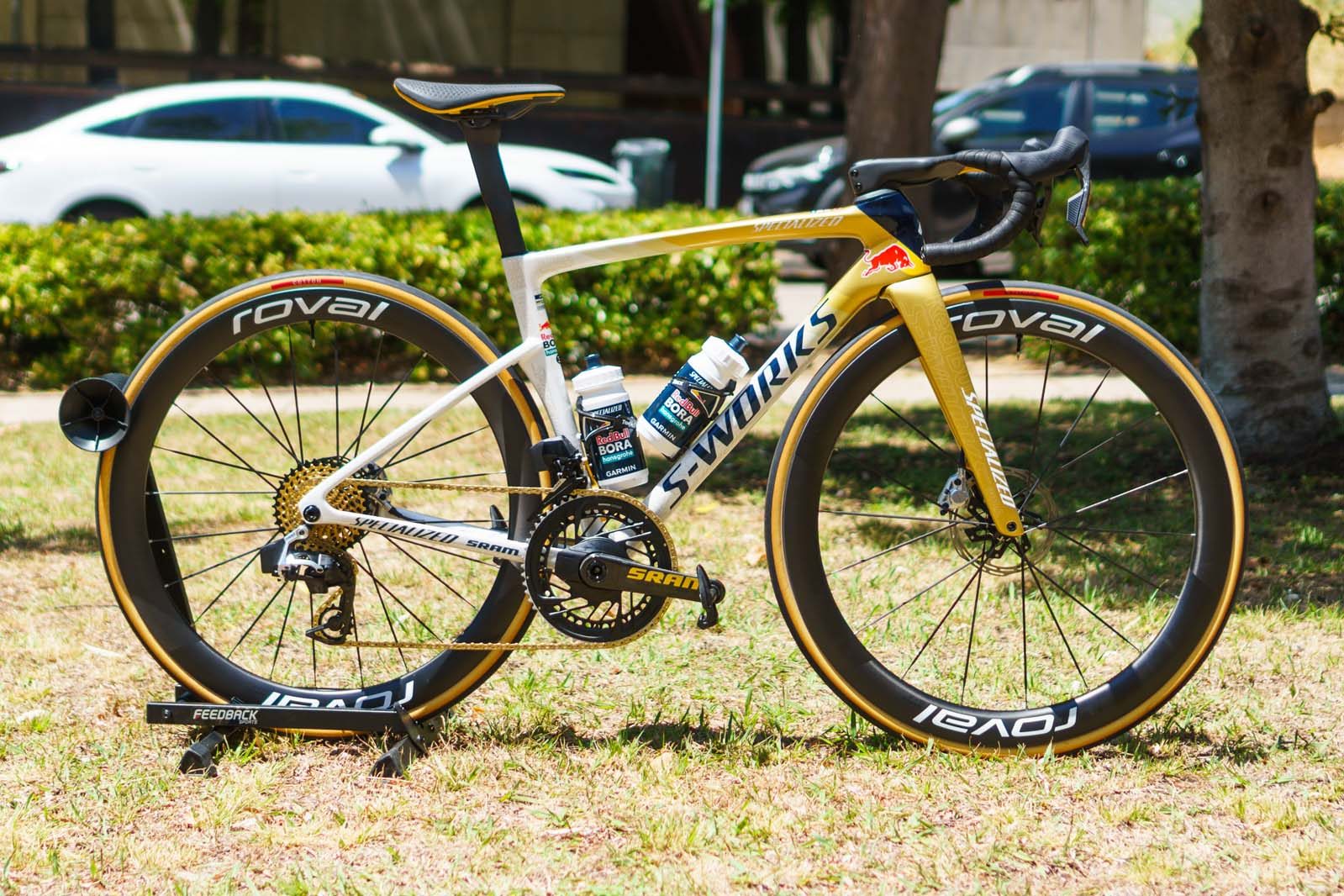
Giant and Specialized both claim very low weights for their latest flagship road bikes. The new Propel Advanced SL and S-Works Tarmac SL9 are each said to weigh around 6.5kg.
However, the pro builds checked at the Tour both exceeded 7kg. That does not necessarily mean the claims are false. It reflects how complete race bikes differ from launch specifications.
Claimed bike weights often exclude pedals, bottle cages, computer mounts and other race-day equipment. Professional bikes also frequently carry paint schemes designed for visibility, sponsors and rider identity.
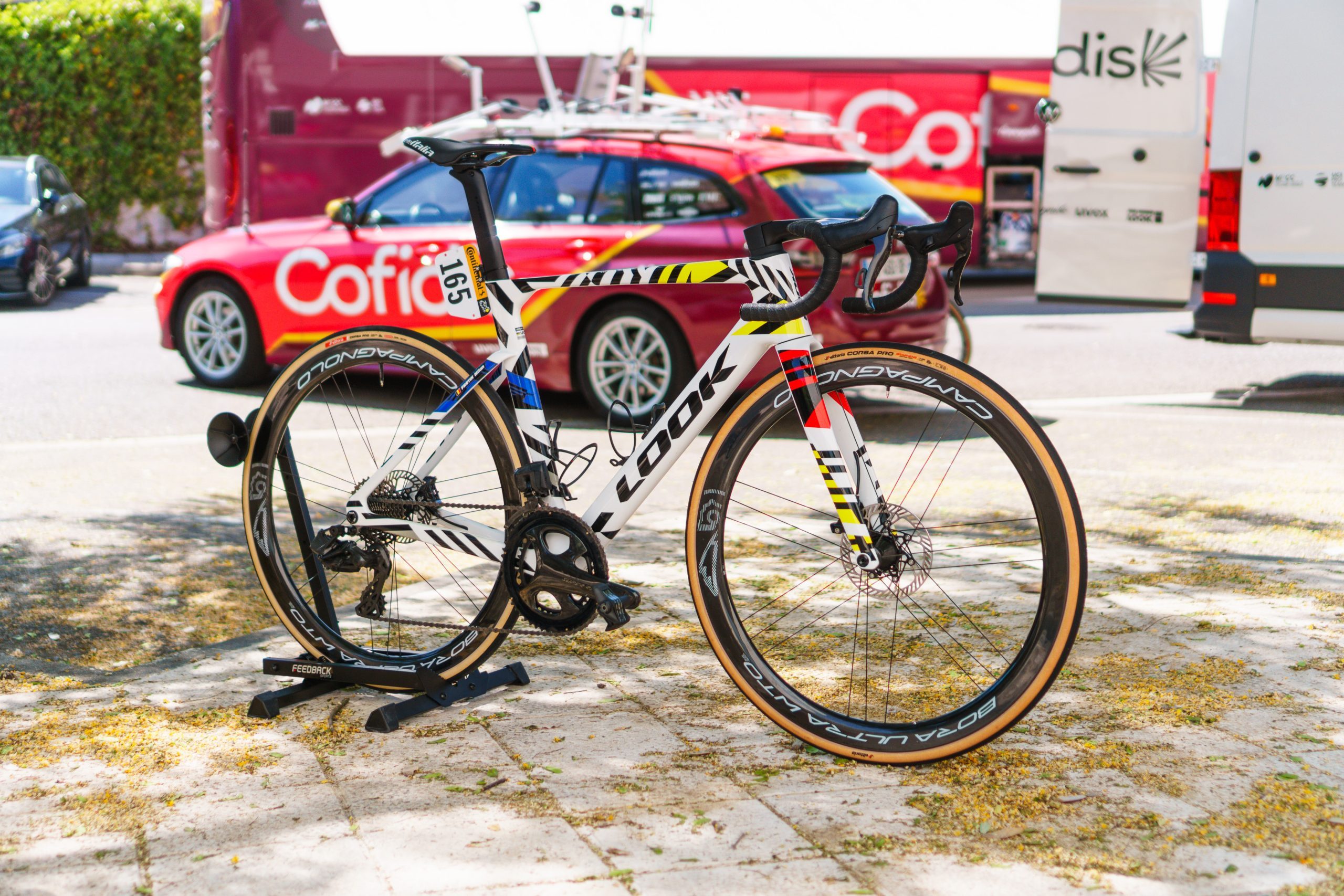
Paint can add meaningful weight. Cofidis provided a useful comparison with two Look 795 Blade RS bikes. One carried an elaborate paint finish, while another was all black. The difference was around 200g on the scales.
Pogačar’s bikes offered another example. His raw carbon Colnago Y1Rs weighed just over 7.2kg this year. His world champion-themed version checked last year in Lille was well over 7.5kg.
Red Bull – BORA – hansgrohe also had two Specialized options for Remco Evenepoel. The team presented a gold-themed Tarmac SL9 for filming. An otherwise similar all-black bike with his name sticker was also spotted.
If that black version saved roughly 200g through paint, it would sit around 6.8kg ready to race. Evenepoel used that bike on stage two, the first hilly day.
Small parts keep adding weight
Luke Plapp’s Giant Propel weighed 7.1kg at the race. Earlier workshop checks of a painted build recorded 6.56kg without pedals, but with cages and a computer mount.
The difference came from several small changes. Plapp’s bike added pedals, used a Dura-Ace groupset rather than lighter SRAM Red AXS, and ran larger 30c tyres instead of 28s.
Those details show why ready-to-ride Tour bikes rarely match the lightest headline claims. Yet they do not fully explain why manufacturers still struggle with a 6.8kg threshold set almost three decades ago.
Frames are rarely the main obstacle now. Specialized claims the S-Works Tarmac SL9 frame weighs 687g. The brand also says it is more aerodynamic than a Factor One.
A 687g frame weighs about the same as a lightweight front wheel. It also roughly matches two 30c Continental GP5000 S TR tyres.
That leaves about 6kg in the rest of the build. Wheels, tyres, hydraulic disc brakes, drivetrains, finishing kit and race accessories all add up quickly.
Modern pro bikes must balance aerodynamics, braking performance, handling, durability and sponsor requirements. Weight remains important, but it no longer stands alone.
Hill climb racers know the old lesson well. If pure lightness matters most, rim brakes still offer an advantage. At UK hill climbs, where UCI rules usually do not apply, bikes under 6.8kg remain easy to find.