

Tour de France heat concerns have moved beyond rider performance, with French authorities now able to cancel stages if conditions become unsafe.
Guidelines from France’s Interior Ministry, reported by L’Equipe, give local prefectures authority to stop a stage in extreme circumstances. The measure applies when heat affects public safety, race staffing, or emergency services.
The ministry described cancellation as an “exceptional measure” to be taken with the organizer and relevant parties. It said a stage could be scrapped if health or operational conditions prevent safe crowd management and emergency support.
That decision would sit with prefectures, the regional administrations responsible for local public order and safety. Any cancellation would affect riders, teams, staff, spectators, broadcasters, and race organization.
The guidance appears focused mainly on the public and those working around the race. Riders remain covered by the UCI heat protocol and by measures from Tour organizer ASO.
Tour de France heat measures widen safety options
Prefectures would not need to jump directly to cancelling a stage. The guidelines also allow authorities to close selected public areas, alter the route, or restrict public alcohol consumption.
The issue carries extra weight after a severe June heatwave across Europe. Another spell of oppressive weather may also affect the race.
Tour director Christian Prudhomme told L’Equipe that ASO stays in close contact with the Interior Ministry. He said prefects already have powers to act for public safety, calling the approach “common sense.”
Prudhomme also outlined ASO’s public-facing heat measures. The race will broadcast heat warnings on television, radio, local channels, and along the route.
The Tour caravan will distribute 2.5 million caps, 550,000 cans of water, and 400,000 liters of water. Those measures target spectators as much as the racing convoy.
For the peloton, heat could become more than a health and logistics problem. It could also shape the general classification.
Extreme heat could alter the GC contest
The final stage of the Tour de Suisse Women showed how quickly heat can overturn a race. Elisa Longo Borghini began the day 10 seconds behind Marlen Reusser.
Longo Borghini had reason to believe she could fight for overall victory. Instead, she cracked badly and lost almost 10 minutes to Reusser.
She later said she had suffered heat stroke. She also said she could not remember much of the final climb.
A similar collapse by a Tour contender would radically change the race. EF Education-EasyPost boss Jonathan Vaughters raised that prospect at his team’s press conference on Friday.
Vaughters said sustained 35–40°C days create cumulative fatigue across a three-week race. He said that makes racing more attritional and less explosive.
He also argued that the body cannot generate the same power in extreme heat as in milder conditions. In his view, that can favor durable riders over explosive specialists.
The question also touches the rivalry between Tadej Pogačar and Jonas Vingegaard. Pogačar entered the race as the number one favorite.
In 2021, his then-coach Iñigo San Millán told Velo that Pogačar’s gains on stages 8 and 9 likely owed something to cold, wet Alpine weather. San Millán said Pogačar performs well in bad weather.
Vingegaard’s Tour victories over Pogačar in 2022 and 2023 were linked by some to his ability to manage heat. If hot conditions return, that could again become relevant.
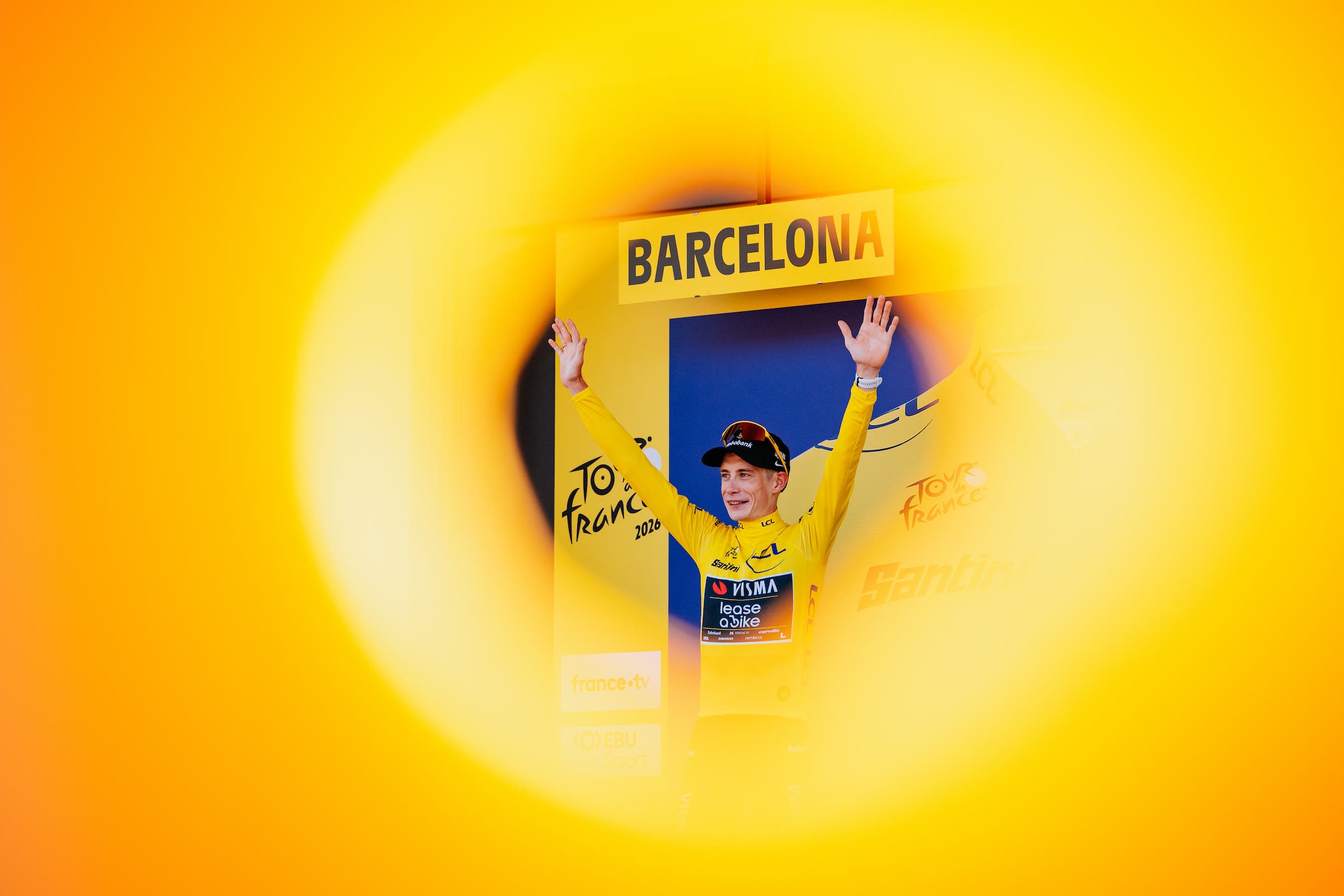
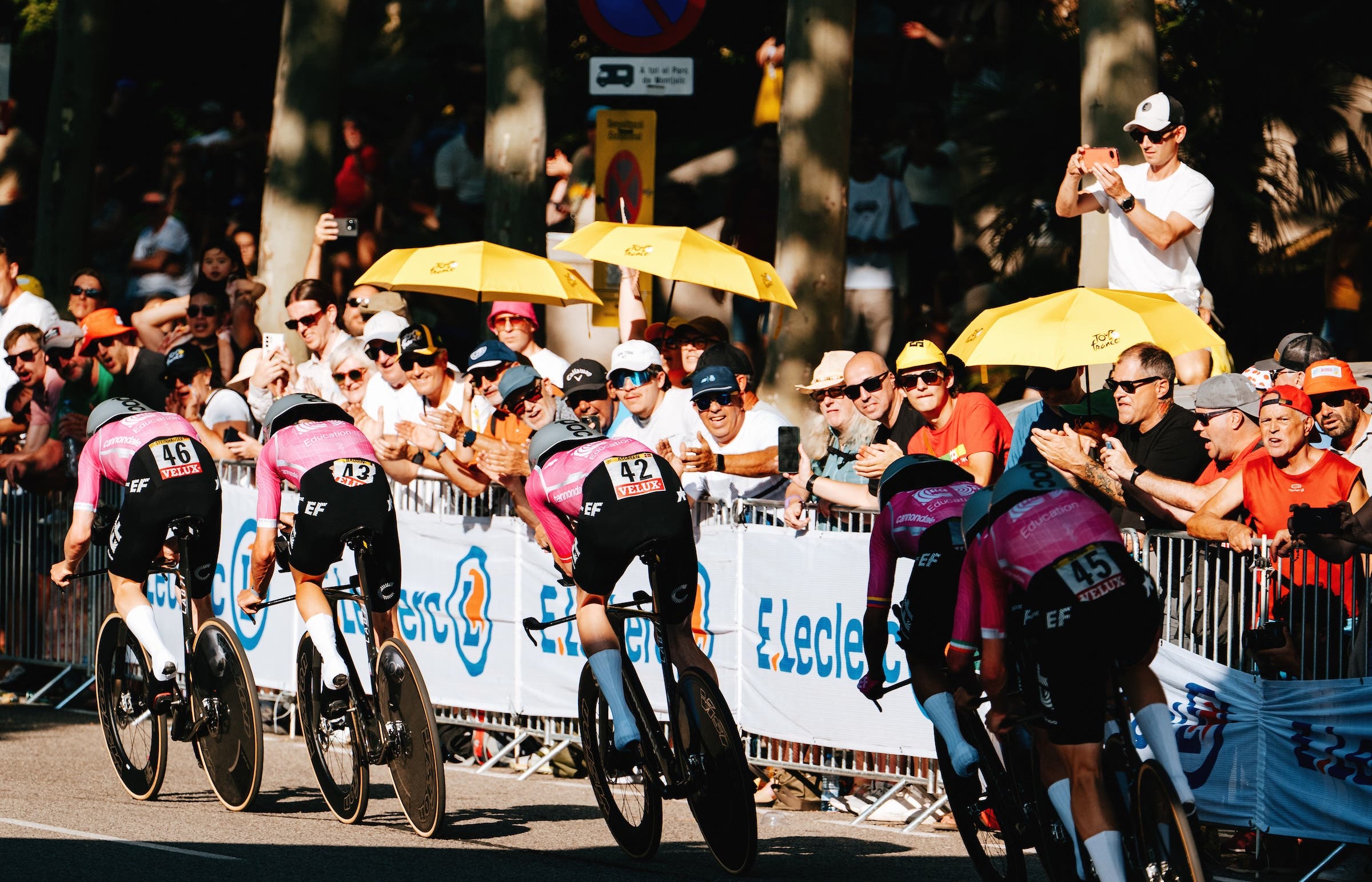
Vingegaard already has an early advantage after taking yellow in the opening team time trial. The margin was small, but it carried morale value.
Body type and cooling could matter
Vaughters said rider physiology may become important in sustained heat. Smaller, compact riders can be more aerodynamic but may shed heat less effectively.
Taller riders have more surface area and may dissipate heat better. Vaughters said it remains unclear which advantage matters more in extreme heat.
Tour debutant Paul Seixas is listed at 1.86m. That makes him far taller than Pogačar at 1.76m and Vingegaard at 1.75m.
Among other general classification riders, Florian Lipowitz is 1.81m and Isaac Del Toro is 1.80m. Remco Evenepoel is 1.71m, one centimeter taller than Tom Pidcock.
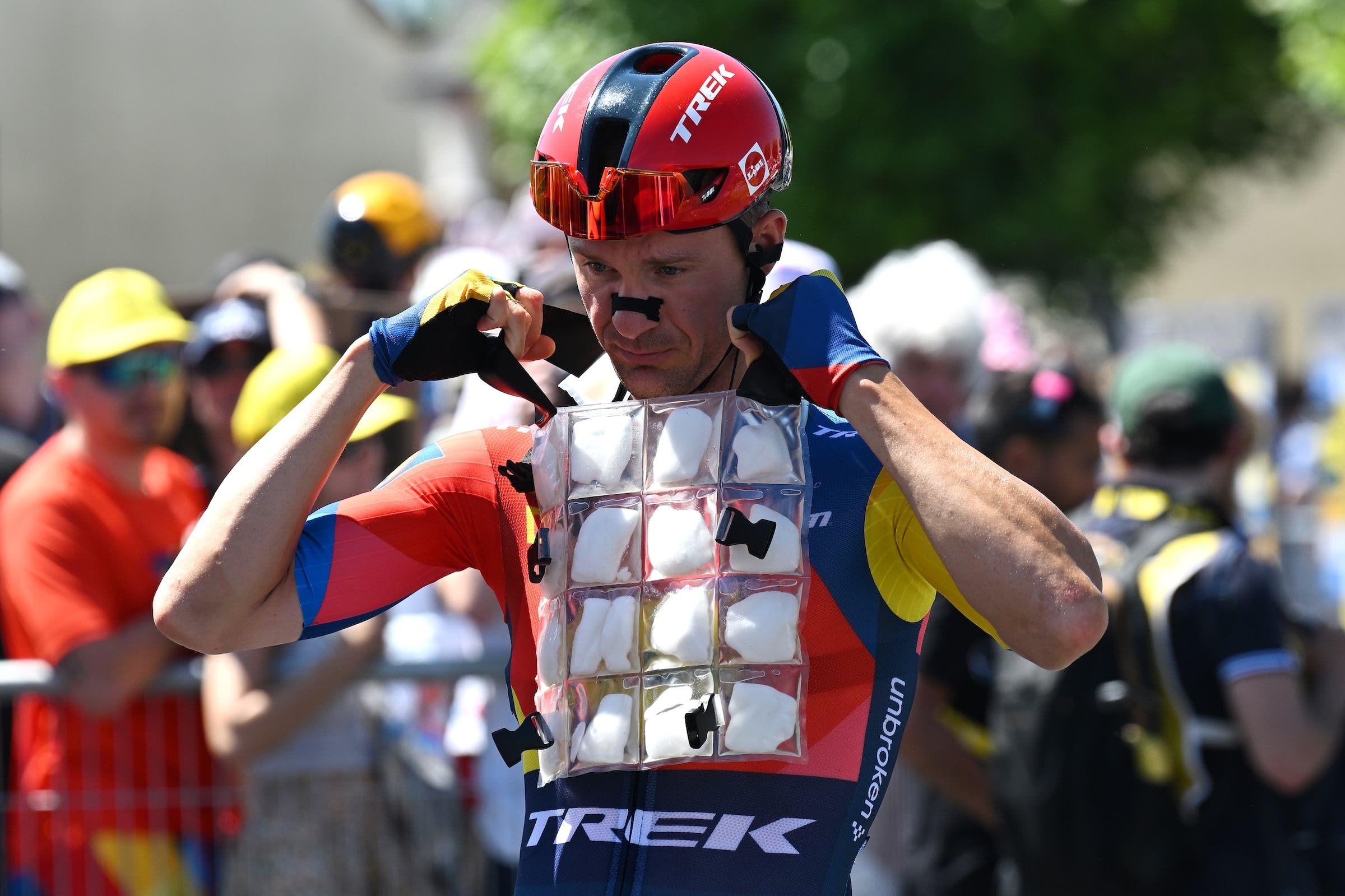
Vaughters said EF Education-EasyPost hopes to benefit if the race becomes heavily attritional. He pointed to Richie Carapaz and the team’s work on cooling technology and hydration.
He also said Ben Healy has been highly disciplined with heat-adaptation training. Other teams have almost certainly prepared for similar conditions.
For now, the weather remains an extra uncertainty in an already unpredictable Tour. If heatwaves intensify, the race could become harder, slower, and less controllable.
The biggest consequence may sit outside team strategy. Under the new guidance, key stages could disappear if authorities decide public safety requires it.