

The stage 17 breakaway battle could define the next Tour de France test, with early climbing favouring aggressive riders.
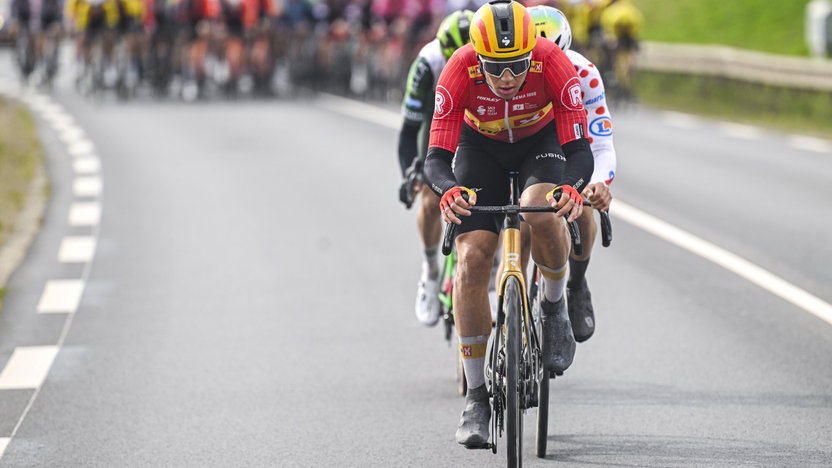
The route starts in Chambéry and gives attackers a long launchpad almost immediately. That opening terrain may make control extremely difficult for the remaining sprinter teams.
With the race deep into its third week, fatigue will also shape the tactics. Breakaway specialists have few opportunities left, so the fight to enter the move should be intense.
Teams chasing green jersey points still have reasons to organise behind. Yet this stage asks for a large investment before the race even settles.
Stage 17 breakaway battle starts early
The first 10 kilometres are flat, but the race changes quickly after that. The next 38 kilometres rise almost constantly, creating ideal ground for attacks.
Several steeper sections should help strong riders split the peloton and form a powerful group. The hardest marked climb comes late in that opening sequence.
The Col des Prés is three kilometres long at 7.2 percent. Those numbers look manageable in isolation, but the approach makes it much harder.
Riders will already have climbed for more than 35 kilometres before reaching it. That should expose tired legs and punish anyone out of position.
A steep, technical descent follows before the Côte de Saint Jean d’Arvey interrupts the drop. That climb is 1.3 kilometres at 6.8 percent.
Its first 700 metres average about 10 percent, offering another platform for attacks. It also begins soon after a corner, reducing riders’ speed at the bottom.
After that, the stage becomes less selective but not simple. A 7.5-kilometre valley leads towards the uncategorised Col de Couz.
That drag lasts 11.5 kilometres at 2.8 percent. It should not decide the stage alone, but it could extend the early battle.
Technical finish complicates any chase
The following 84.5 kilometres are more straightforward. A balanced breakaway could cooperate there and build a useful advantage over the peloton.
However, the final 5.5 kilometres bring fresh problems for any chasing group. A short rise ends with three kilometres remaining and may disturb organisation.
The roads then turn technical, placing a premium on positioning. The first corners come on wider roads, but the last two bends look more dangerous.
The first of those arrives about 650 metres from the line. The second comes with 350 metres remaining and could create a nervous finale.
The final 300 metres rise at 1.6 percent. That gentle gradient may still matter after a demanding day, especially in a reduced sprint.
Green jersey fight shapes team choices
Alpecin-Premier Tech still have motivation to chase because of the green jersey contest. Yet controlling this stage could prove unrealistic.
Mads Pedersen of Lidl-Trek holds a 31-point lead. He also appears better suited to this terrain than many pure sprinters.
Pedersen may gain more points at the intermediate sprints on stages 18 and possibly 20. He could also have a stronger chance in Paris.
That situation may force Alpecin-Premier Tech to reconsider their approach during the opening 50 kilometres. A breakaway strategy with Mathieu van der Poel or Emiel Verstrynge could become more practical.
Lidl-Trek will again build around Pedersen. Quinn Simmons said on the rest day that he would prefer chasing the stage himself.
However, Simmons also made clear that he would follow team orders. Pedersen remains the obvious leader for the squad.
With Simmons, Mathias Vacek, Derek Gee-West, Toms Skujiņš and Carlos Verona, Lidl-Trek have major depth. That support makes Pedersen difficult to isolate.
Van der Poel, Ganna and Stuyven among danger men
Soudal Quick-Step are expected to back Jasper Stuyven after Tim Merlier’s withdrawal. Stuyven has already carried a heavy season workload.
His programme has included the spring classics, the Giro d’Italia, the Baloise Belgium Tour and the Tour de France. He still appears to be racing strongly.
Netcompany-Ineos are likely to turn towards Filippo Ganna. The Italian was deeply disappointed with his time trial performance.
That disappointment could sharpen his motivation. In past Grand Tours, Ganna has often targeted breakaways after completing the time trials.
Van der Poel may be Alpecin-Premier Tech’s strongest option if the race breaks open early. He showed excellent form on stage 9.
He also appeared to save energy in the time trial. That could point towards a clear focus on this stage.
Nico Denz of Red Bull-Bora-Hansgrohe is another dangerous candidate. He usually works for others but thrives when allowed to chase his own chance.
Jayco AlUla have multiple cards to play. Michael Matthews and Mauro Schmid look like their leading options for this parcours.
Matthews fits the stage profile well. Schmid has already shown strong form by winning a stage earlier in the race.
Visma | Lease a Bike have reassessed their goals with Jonas Vingegaard out of the Tour de France. Bruno Armirail took eighth in the stage 16 time trial.
Even so, Matteo Jorgenson appears their best option here. The American is recovering after his crash and illness.
EF Education-EasyPost can use Michael Valgren and Kasper Asgreen. Valgren won a stage at this year’s Giro d’Italia.
Asgreen also suits this kind of race. He won stages at last year’s Giro d’Italia and the 2023 Tour de France.
Bahrain-Victorious have an intriguing option in Vlad Van Mechelen. He impressed at the Belgian time trial championships and the Dauphiné.
Matej Mohoric could be valuable alongside him because of his experience and improving form. If both make the break, Bahrain-Victorious gain a strong hand.
Other riders to watch include Fred Wright of Pinarello-Q36.5, Huub Artz of Lotto-Intermarché, Davide Ballerini of XDS Astana and Magnus Cort of Uno-X Mobility.